Body-Focused Repetitive Behaviors (BFRBs) in adolescence are more common than many people realize. During the teenage years, increased stress, social pressures, academic demands, and emotional changes can contribute to behaviors such as hair pulling, skin picking, nail biting, and other repetitive body-focused habits. Unfortunately, people often misunderstand these behaviors, dismiss them as “bad habits,” or criticize them—when teens really need understanding and support.

What Are BFRBs and How Do They Show Up in Teens?
Body-Focused Repetitive Behaviors (BFRBs) are repetitive self-grooming behaviors that can cause physical damage and emotional distress. They can sometimes be difficult to spot. Many teens want to stop these behaviors but often feel unable to control the urges.
Common BFRBs seen in adolescents include:
- Hair pulling (Trichotillomania) from the scalp, eyebrows, or eyelashes.
- Skin picking (Excoriation Disorder) on the face, arms, or other areas.
- Nail biting or cuticle picking.
- Cheek or lip biting/chewing.
- Pulling, picking, or biting during periods of stress, boredom, concentration, or anxiety.
Signs parents and teachers may notice:
- Bald spots, thinning hair, or missing eyelashes/eyebrows.
- Frequent scabs, wounds, or skin irritation.
- Attempts to hide affected areas with clothing, makeup, or hairstyles.
- Increased embarrassment or avoidance of social situations.
- Difficulty concentrating due to urges or shame about the behavior.
3 Ways Parents and Teachers Can Support Adolescents with BFRBs
1 – Respond with Curiosity, Not Criticism
Many teens already feel embarrassed about their behavior. Pay close attention to what you say to help alleviate the toll BFRBs can take on relationships. Creating a safe space for the teen starts with caring about what you say and how you say it.

Instead of saying:
- “Why can’t you just stop?” This kind of question undermines the teen and suggests you have no idea how hard BFRBs are to adjust. Think of something you struggle with, and imagine someone close to you asking why you “can’t just” change it, as if it were easy and anyone else could do it. Would you feel safe with that person? Would you feel comfortable coming to them to share when you needed support with that thing?
- “You need more self-control.” This command again reveals a lack of understanding of what BFRBs are and how they work. It doesn’t offer solutions or space to brainstorm ways to handle a trigger or adjust a response. Simple solutions only work for simple problems, not complex issues.
- Try:
- “I’ve noticed this seems difficult for you. How are you feeling about it?” Take use of the word ‘seems’, followed by the question. You are saying that, from the outside, you have a certain impression. You are then asking for feedback about how accurate your assessment was. This leaves lots of room for honest reflection from your teen, and even some questions from them. They might ask, “Why do you think it seems difficult?” Be ready to answer with compassion and honesty about what you are actually witnessing. Then, reiterate your offer of a listening ear.
- “Is there anything stressful going on lately?” Prepare for two things when you ask this question: to listen to something that might be hard to hear, and to open up as well. Showing a teen they can be honest about what worries them without punishment or judgment is the best way to nurture their sense of safety and support. Allowing yourself to be vulnerable as well (regarding appropriate subject matter) fosters mutual trust.
A supportive approach helps teens feel safe enough to open up. Anything that can be perceived as an accusation (even the smallest of accusations) can put people of all ages on the defensive; curiosity fosters open communication.
2 – Look for Emotional Triggers
BFRBs often serve as a coping mechanism for uncomfortable emotions. Those we see for Teen Therapy in Woodland Hills share their stressors, when and where they occur, and how they overlap with other stressors. In real time, however, they may struggle to identify a trigger’s impact on them or need extra support to address it.
Pay attention to whether behaviors increase during:

- School stress. Certain classes may be challenging, or the combination of courses in a semester may be heavier at times. If your teen is working towards a specific academic future, they may be paying very close attention to their GPA. They may be in competitive classes or friend groups, or attend a school that is focused on academic excellence.
- Social anxiety. In our Woodland Hills Teen therapy sessions, we hear a lot about the social pressures teens are facing. If you notice an increase in BFRBs that coincides with friendship mishaps, high-stakes social events, or expressed frustration about trying to connect with a peer group, that is a trigger to pay attention to.
- Family conflict. The home is an ecosystem; you may have disagreements behind closed doors, but they still happen in the house. Don’t assume kids are oblivious to mood changes; they are often the most perceptive of non-verbal communication.
- Boredom. BFRBs often coincide with having nothing to do. When you notice idle hands starting to twitch, having something nearby to hold can redirect that energy. Think drawing, knitting, stress balls, or fidget spinners.
- Perfectionism or pressure to perform. Everyone needs an outlet; pressure to perform and show up “perfectly” is often an inward experience, where the person struggling won’t let themselves show the toll their goals are taking. This sort of emotional state is ripe for detrimental habits like BFRBs. They may feel like a release, or something they can do in private to process how overloaded their nervous system feels.
Understanding triggers can help identify healthier coping strategies.
3 – Provide Alternative Coping Tools
As a Teen Counselor in Woodland Hills, I know that our teens with BFRBs benefit from alternative coping tools. Keeping hands busy can sometimes help reduce urges or circumvent impulses.
Examples include:
- Fidget toys. These are great to have on hand for easy use. Many BFRBs occur when the teen is distracted by a show, a lecture, or any event where they are sitting and listening.
- Stress balls. A stress ball is a great thing to reach for at any time, but it can be especially practical when you’re aware you need to engage in a BFRB.
- Putty or clay. Hands-on activities that can also be a little messy keep your hands busy and bring awareness to your hands. Even putty leaves a slight film that makes you more aware of what you touch.
- Drawing, coloring, or doodling. The hand not holding the pen or pencil can steady the paper; if not, a stress ball or fidget device can help keep both hands occupied.
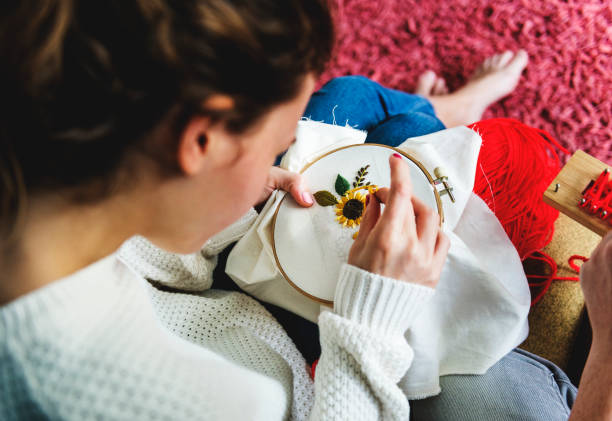
- Knitting, crafting, or other hands-on activities. Any activity which requires both hands is guaranteed to stymie BFRBs as long as the person is actively participating.
The more variety of tools you have, the easier it will be to keep something on hand in any situation. A fidget toy can be quite small and easy to bring along in a pocket or a purse. Arts, crafts, knitting, and putty are great at-home options that you should make accessible. Keep them in a permanent place, perhaps in a basket you can move to the living room or kitchen table. For a long commute, knitting is easy to pack; for a flight, fidget spinners and a drawing/coloring book are TSA-safe. (provided they are not liquid volume or aerosol-based).
For teachers, letting students take notes with one hand and use a fidget toy in the other is a supportive measure that doesn’t necessarily draw attention to the BFRB itself, provided the fidget toy doesn’t become a distraction. Setting aside a private moment to establish parameters about usage should create a mutually agreeable arrangement.
The goal is not punishment—it is providing alternatives.
Key Takeaways
- BFRBs are more than habits—they are complex behaviors often connected to stress, anxiety, or emotional regulation.
- Adolescents struggling with BFRBs need understanding and support, not criticism or punishment.
- Parents and teachers play a key role in recognizing symptoms and helping teens access appropriate resources.
- In-person or online teen therapy for BFRBs gives teens a safe space to talk about emotions, thoughts, triggers, patterns, and behaviors.
How Therapy Can Help
Therapy can help adolescents better understand their urges, identify triggers, and develop healthier coping skills for treating BFRBs. In our Woodland Hills office, our therapists utilize approaches such as Com-B model, Cognitive Behavioral Therapy (CBT), and mindfulness-based interventions to help reduce symptoms while improving self-esteem and emotional well-being. With the right support, teens can learn that they are not defined by their BFRBs—and that recovery is possible.
BFRB Treatment in Woodland Hills
Bodily Focused Repetitive Behaviors (BFRBs)—such as nail-biting, hair-pulling, and skin-picking—are often misunderstood and highly stigmatized, despite being part of the obsessive-compulsive spectrum. While physical health conditions tend to receive empathy and understanding, those struggling with BFRBs are often met with judgment or silence—even though the impact is very real.
At Embracing You Therapy, we’re committed to changing that. Our therapist specializes in treating BFRBs and OCD-related disorders using evidence-based approaches tailored to your unique experience. With the right support, you can regain a sense of control, rebuild your confidence, and move forward without BFRBs holding you back from the life you want to live.
Contact us today for your complimentary 20-minute phone consultation with our Client Care Coordinator.